
Published October 13, 2026
Buying in Burbank's Rancho District: What to Check Beyond the Backyard

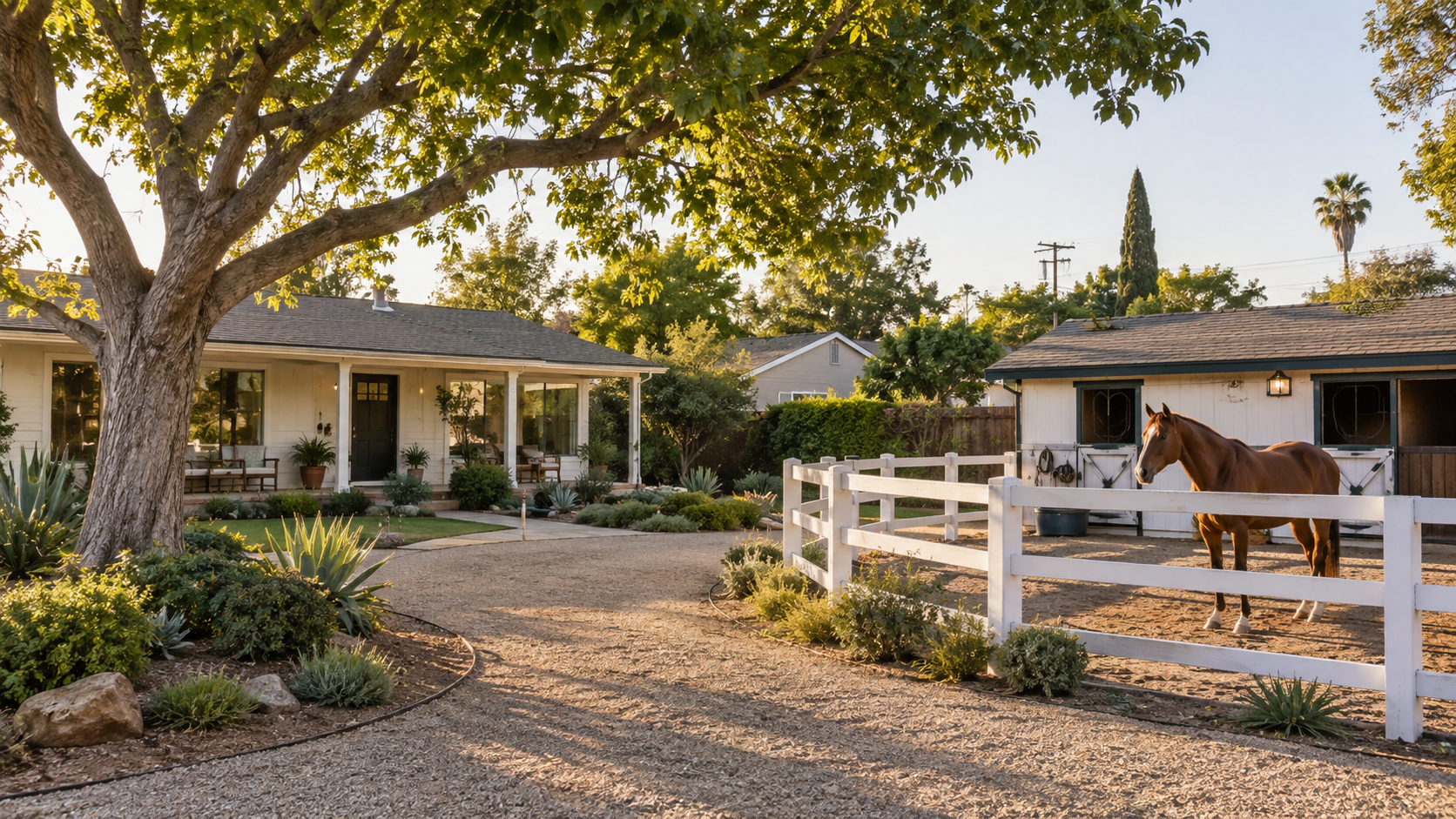
A home in Burbank's Rancho neighborhood can raise questions you wouldn't ask on a typical home tour. Alongside bedrooms, bathrooms, and kitchen storage, you may be evaluating a stable, access to outdoor facilities, or the relationship between a house and its usable yard.
Even if you don't plan to keep horses, the neighborhood's equestrian setting is part of understanding the location. The right property needs to fit your daily routine, your intended uses, and the amount of upkeep you want to take on.
Before deciding that a Rancho home is the one, look closely at the parcel, the layout, and the assumptions behind your plans.
1. Understand which part of the Rancho you're considering
The City's Rancho planning website describes East and West Rancho as two separate areas along Burbank's southern edge. It identifies an ongoing tradition of urban horsekeeping and a mix of residential and other uses. [Source: Burbank Rancho Neighborhood Specific Plan](https://www.burbankrnsp.com/about)
That context is more useful than imagining the Rancho as one uniform setting. Start with the actual address and explore its surroundings. Notice nearby uses, the street layout, and how you would reach your regular destinations.
Two homes advertised within the same neighborhood can differ considerably in outdoor configuration and access. Compare the properties themselves rather than assuming that the neighborhood name guarantees a particular experience.
2. Be clear about why you're buying there
Before touring, write down what attracts you to the Rancho. Is it the possibility of horsekeeping? A detached structure? Outdoor space? A location that works for your job?
Then separate essential requirements from preferences. If keeping a horse on the property is essential, that use needs direct investigation. If you simply like the setting, your priorities may focus more on the house, yard, and surrounding activity.
Share this distinction with your agent at the start. A broad request for “a Rancho home with space” can lead to a very different search than a detailed explanation of how you intend to use the property.
3. Confirm the parcel's zoning and applicable requirements
An existing stable or a neighborhood's equestrian identity does not answer every question about an individual property's approved uses.
The Rancho planning resources link to the R-1-H horsekeeping zone, additional development standards, horse registration, and stable regulations. Use the official resources to frame specific questions for the City.
Bring the address and a description of your plans. Ask which standards apply, how existing structures are documented, and what would be required for changes you are considering.
Avoid treating a neighboring property's features as proof of what you can do. Your decision should rest on information relevant to the parcel you're purchasing and the use you actually need.
4. Evaluate the outdoor layout, not just the lot size
A generous lot measurement can sound promising, but it doesn't show how the space is divided. The house, garage, stable, driveway, landscaping, and other improvements all shape what remains usable.
Walk the property carefully. Where are the gates? Can you reach the areas that need routine maintenance? How do people, vehicles, and animals move through the layout without interfering with one another?
If equestrian use is part of your plan, have an appropriately qualified professional evaluate the facilities and their suitability. Consider access, drainage, shade, storage, and maintenance as questions for that assessment.
A photograph can show that a feature exists. It can't establish its condition, approval status, or suitability for your needs.
5. Investigate access beyond the property line
The City's neighborhood overview identifies connections to the Los Angeles Equestrian Center and Griffith Park, including a connection across the river via the Mariposa Street Bridge. These are neighborhood features, not a guarantee of a particular property's route or access rights.
If those connections influence your purchase, investigate the route from the home. Confirm current access conditions and any rules with the relevant facility or agency.
Apply the same care to a listing's statements about nearby trails or amenities. Ask exactly what is being described and how it would work for you in practice. General proximity doesn't tell you whether a route fits your intended use.
6. Separate current rules from future planning
Neighborhood planning materials can help you understand the issues being considered around the Rancho. They can also be easy to misread if a proposed change is mistaken for an adopted rule.
Review the City's current project materials and ask Planning which requirements are in effect for the address. Don't rely on an old presentation, a listing's shorthand, or a discussion of a possible future policy. The official project website is a starting point for checking the planning process.
If you're considering an addition, replacement structure, or a different use for existing space, investigate feasibility before making that idea central to your decision.
7. Consider the ownership routine
Picture an ordinary week after moving in. What needs cleaning, maintaining, storing, or servicing? Which tasks would you handle yourself, and which would require outside help?
For a property with equestrian facilities, the outdoor routine may be a major part of ownership. If you don't need those features, consider whether retaining or changing them suits your plans, and investigate any required approvals before assuming a change is straightforward.
The goal is to understand the property you would own today. Future possibilities should remain separate until you've established whether they are practical and permitted.
8. Test the routes that matter to you
The Rancho's relationship to the surrounding area is part of its appeal, but your commute should be assessed using your actual destination.
Try the route at a representative time, including the entrance you would use at work. Check the trips that support your week, such as groceries, appointments, or visits to outdoor facilities.
Afterward, compare your observations with the property's strengths and unresolved questions. This helps you decide whether the home works as a complete package rather than simply offering one memorable feature.
Exploring homes in Burbank's Rancho neighborhood?
Tell us what brings you to the Rancho, your expected timeline, and the uses that matter most. Include any listings you've already saved so we can discuss your priorities in the context of actual properties.
Whether you're looking for equestrian facilities or a different kind of outdoor space, a focused search begins with clear questions.