
Published August 4, 2026
How Is the Palisades and Altadena Rebuild Affecting Los Angeles Housing Supply in 2026?

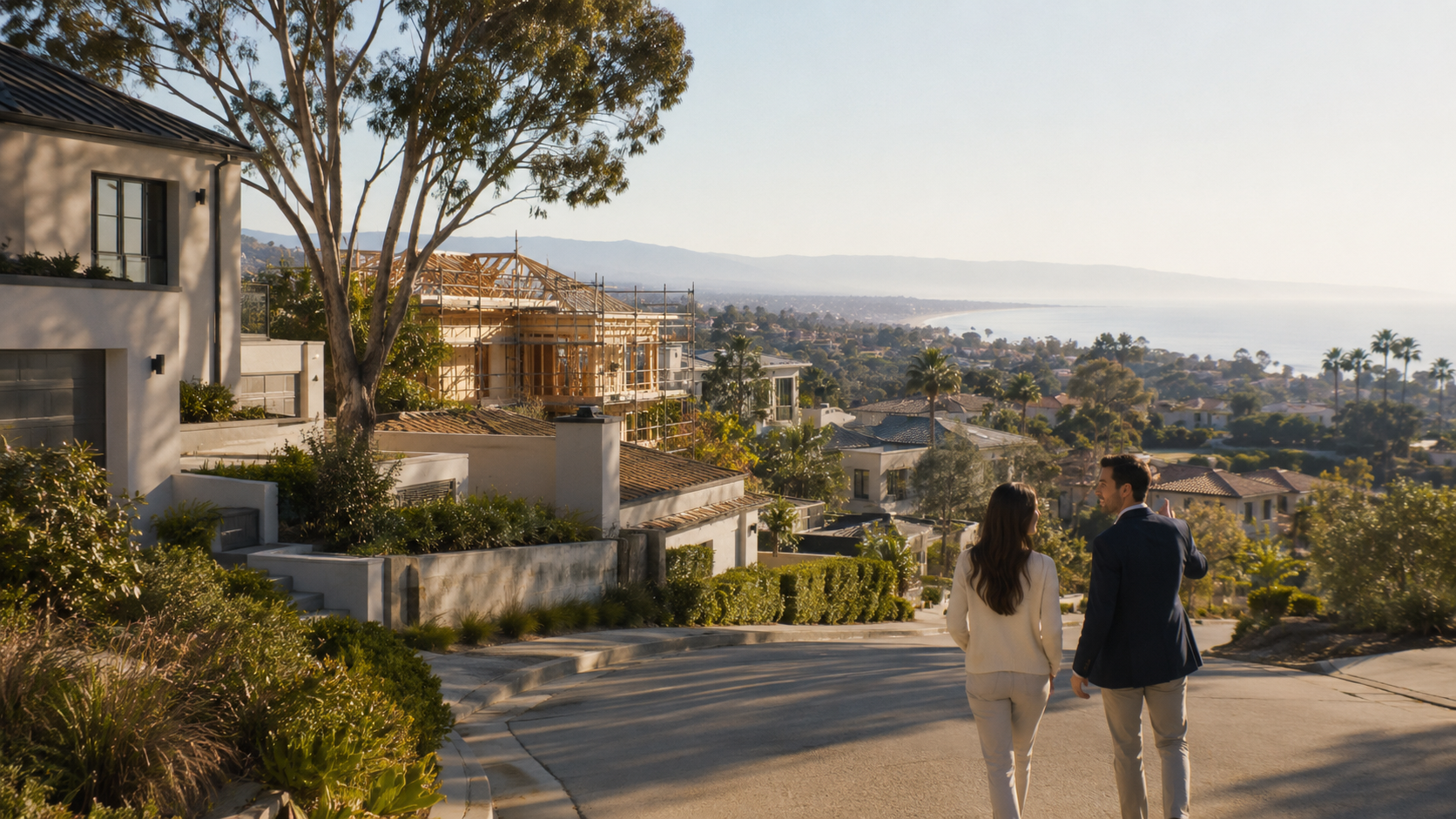
How is rebuilding in Pacific Palisades and Altadena affecting Los Angeles housing supply? New construction is progressing, but the recovery remains gradual, keeping nearby inventory and rental demand under pressure.
The rebuilding of Pacific Palisades and Altadena is no longer a distant plan—it is actively reshaping the Los Angeles real estate market.
More permits are moving through the system, construction is appearing on previously cleared lots, and local agencies have introduced programs intended to make rebuilding faster. Yet the recovery is still measured in years, not months.
For homeowners, buyers, sellers, and investors, that creates an unusual August 2026 housing environment. Thousands of properties are somewhere between loss, design, permitting, construction, sale, or long-term uncertainty. Meanwhile, displaced households continue to influence demand in nearby communities.
Understanding the market requires looking beyond a single permit count. The real question is how quickly damaged housing is returning—and what happens to surrounding neighborhoods while that process unfolds.
The Rebuilding Process Is Moving Forward, but Housing Supply Has Not Fully Returned
As of early January 2026, more than 2,600 residential rebuilding permits had reportedly been issued across Pacific Palisades and Altadena, with approximately 3,340 additional applications under review. That represented meaningful progress, but only a portion of the nearly 13,000 homes reported lost in the two communities.
A permit is an important milestone, but it is not the same as a completed, move-in-ready home.
After receiving approval, a homeowner may still need to:
- Finalize insurance payments or financing
- Select a contractor and secure labor
- Resolve utility or infrastructure questions
- Complete site preparation and inspections
- Purchase materials
- Navigate construction delays
- Obtain a certificate of occupancy
These steps help explain why Los Angeles housing supply can remain constrained even while permit activity rises.
The recovery is progressing, but the replacement homes are returning to the market gradually rather than all at once.
Pacific Palisades and Altadena Are Following Different Recovery Paths
Although the two communities are often discussed together, their rebuilding processes are not identical.
Pacific Palisades is located within the City of Los Angeles, so rebuilding generally moves through city agencies and Los Angeles Department of Building and Safety procedures. Altadena is an unincorporated Los Angeles County community, meaning its rebuilding process is managed through county departments.
Both jurisdictions have introduced streamlined programs, but differences in planning rules, geography, lot conditions, infrastructure, homeowner resources, and local priorities can affect the pace of recovery.
Pacific Palisades
Los Angeles has taken several steps to accelerate rebuilding in Pacific Palisades, including reduced permit clearances, self-certification options for qualifying projects, standard-plan programs, fee relief, and a dedicated permitting support center.
The city reported in late 2025 that Palisades rebuilding permits were being approved nearly three times faster than typical single-family projects before the fires. At that time, more than 1,000 permits had been issued for approximately 515 addresses.
A dedicated Palisades inspections and permitting center also opened in February 2026 to give residents more direct access to rebuilding assistance.
These changes can shorten portions of the approval process. However, the pace of permitting does not eliminate the financial and logistical challenges that occur after approval.
Altadena
Altadena’s rebuilding process is being coordinated through Los Angeles County. The county offers a one-stop permit center, a permitting progress dashboard, pre-approved plans and other recovery resources.
Pre-approved plans are designed to create a more predictable review process, reduce certain design expenses and shorten review times for qualifying projects.
At the same time, the future character of Altadena remains an important part of the recovery conversation. Residents and policymakers continue to discuss density, lot use, affordability and whether rebuilding rules should prioritize restoring the community’s previous development patterns or allow more housing flexibility.
Those decisions could influence not only how quickly Altadena rebuilds, but also what its future housing supply looks like.
Where Are Displaced Households Going?
One of the most immediate effects of the rebuilding timeline is increased housing demand outside the fire-affected areas.
Households that cannot yet return may be renting, purchasing another home, living with family or relocating temporarily. Some may ultimately decide not to rebuild.
That demand can spill into communities such as:
- Brentwood
- Santa Monica
- Mar Vista
- West Los Angeles
- Malibu
- Pasadena
- La Cañada Flintridge
- Sierra Madre
- South Pasadena
- Glendale
- Burbank
- The San Fernando Valley
- Eastern Ventura County
Not every nearby neighborhood will experience the same effect. Housing demand depends on price, commute patterns, school preferences, insurance availability, lifestyle needs and whether displaced residents want to remain close to their original community.
Still, the loss of thousands of homes creates a regional ripple effect. Even households planning to rebuild may need replacement housing for several years.
Why the Rebuild May Continue Supporting Rental Demand
The rental market is one of the clearest places where rebuilding delays can affect housing supply.
A household may receive a building permit but remain unable to occupy the property until construction is complete and final approvals are issued. Depending on project complexity, financing and contractor availability, that may require a lengthy rental period.
This can support demand for single-family rentals, furnished homes and longer-term leases in surrounding communities.
Rental demand may be especially noticeable for properties that provide:
- Multiple bedrooms
- Outdoor space
- Access to established schools
- Flexible lease terms
- Pet-friendly policies
- Proximity to the affected neighborhood
- Storage for belongings
- Space for multigenerational living
For landlords, this does not mean every rental should be priced aggressively. Affordability remains a major constraint, and households dealing with insurance claims may have firm housing budgets.
For tenants, starting the search early and preparing documentation can be helpful, especially when seeking a larger single-family home in a competitive area.
Will Rebuilding Add Inventory to the For-Sale Market?
Rebuilding will eventually restore housing stock, but not every property will return as the same type of home—or remain with the same owner.
Fire-affected lots can follow several different paths:
- The original owner rebuilds and returns.
- The owner rebuilds and later sells the completed home.
- The owner sells the vacant lot to a builder or investor.
- A new buyer purchases the lot and creates a custom home.
- The property remains vacant while financial or legal issues are resolved.
- A qualifying property is rebuilt with a different size or configuration.
This means the recovery can create two distinct forms of real estate inventory: vacant land and newly constructed homes.
Vacant lots may appeal to buyers who are comfortable managing architecture, permitting, insurance and construction. Newly completed homes may attract buyers seeking modern design and updated fire-resilient features without taking on the rebuilding process themselves.
However, neither category functions like ordinary resale inventory. Lot values can be difficult to compare, and new construction pricing may reflect elevated labor, material, financing and compliance costs.
What Does the Rebuild Mean for Home Prices?
The rebuilding process does not create a simple “prices will rise” or “prices will fall” outcome.
Several competing forces are operating at the same time.
Factors that may support prices
Limited replacement housing can sustain demand in nearby neighborhoods. Buyers who want to remain in West Los Angeles, the foothills or other established communities may compete for a relatively small number of suitable properties.
Newly built homes may also command premiums when they include modern layouts, energy-efficient systems and updated construction standards.
Factors that may limit prices
Higher mortgage rates, insurance expenses, rebuilding costs and affordability pressures may reduce what buyers can pay.
Vacant lots can also trade at significant discounts to previous improved-property values because the buyer is assuming construction risk and carrying costs.
As a result, homeowners should be careful with broad headlines. A completed home, a damaged structure, a cleared lot and an original-condition home in an adjacent neighborhood are four different products and should not be valued using the same assumptions.
Insurance Is Now Part of the Housing-Supply Conversation
Insurance availability affects whether a home can be financed, rebuilt, sold or comfortably owned.
In higher-risk communities, buyers may need to investigate insurance much earlier than they did in previous markets. Waiting until the final days of escrow can expose a buyer to unexpectedly high premiums or limited coverage options.
Sellers may benefit from gathering information about the property’s current policy, fire-hardening features, roof, vegetation management and prior claims before listing.
For rebuilding homeowners, insurance disputes and payment timing can affect construction schedules even after plans have been approved. CalMatters has noted that insurance, mortgage, utility and construction challenges continue to make the recovery a multiyear process for many households.
What Buyers Should Consider in August 2026
Buyers interested in Pacific Palisades, Altadena or nearby communities should approach the market property by property.
Before moving forward, consider:
- Whether the property is a completed home, rebuild, damaged structure or vacant lot
- The availability and estimated cost of insurance
- Current zoning and rebuilding restrictions
- Utility restoration and infrastructure conditions
- Construction activity on surrounding lots
- Potential noise, traffic and dust during the recovery
- The experience of the architect, builder or development team
- Whether the purchase requires conventional financing, construction financing or cash
- The long-term character of the surrounding neighborhood
A lower purchase price does not always mean a lower total cost. Buyers considering vacant land should calculate design, engineering, permitting, site work, construction, financing, insurance and contingency expenses.
What Sellers Should Consider
Sellers in affected and adjacent communities need a pricing strategy grounded in current property conditions.
A successful listing should clearly communicate:
- The property’s physical condition
- Permit and planning status
- Available reports or architectural plans
- Utility status
- Insurance information when appropriate
- Relevant rebuilding or neighborhood activity
- Features that distinguish the property from competing inventory
Owners of unaffected homes nearby may benefit from limited supply, but buyers will still compare condition, insurance expense and overall monthly payment.
Overpricing based solely on scarcity can lead to longer market times. Accurate positioning, strong documentation and thoughtful presentation remain essential.
Frequently Asked Questions
Is Los Angeles replacing the homes lost in Pacific Palisades and Altadena quickly?
Rebuilding activity has accelerated, and thousands of permits have been issued or entered review. However, the number of completed homes remains far below the number lost. Housing supply will likely return gradually over several years rather than through a rapid wave of completions.
Does every issued permit represent one replacement home?
Not necessarily. Permit reporting may count different permit types, project stages or multiple permits connected to one address. A permit also does not indicate that construction is complete. For the clearest picture, permit counts should be reviewed alongside address-level projects, construction starts and certificates of occupancy.
Will nearby home prices increase because of the rebuild?
Limited inventory and displaced demand may support values in some nearby neighborhoods, but mortgage rates, insurance costs and affordability can limit price growth. Results will vary significantly by community and property type.
Are vacant lots less expensive than buying an existing home?
The initial purchase price may be lower, but the full project can be expensive. Buyers should include architecture, engineering, permits, construction, financing, insurance, landscaping, utility work and contingency reserves in the budget.
Is it safe to buy while a neighborhood is still rebuilding?
That depends on your needs, risk tolerance and the specific property. Some buyers may see a long-term opportunity, while others may prefer an established neighborhood with less construction uncertainty. Thorough inspections, insurance research and professional guidance are especially important.
How long will the Palisades and Altadena recovery take?
There is no single completion date. Permitting has moved faster than in some previous California disaster recoveries, but construction, insurance and financing challenges mean the broader recovery is expected to remain a multiyear process.
The August 2026 Outlook
The Pacific Palisades and Altadena rebuild is creating visible progress, but it has not yet restored the housing supply that Los Angeles lost.
Permits are increasing. New construction is beginning. Government agencies are offering streamlined pathways and dedicated assistance. Yet thousands of households remain in transition, and every project follows a different timeline.
For the wider Los Angeles housing market, the result is continued pressure on certain rental and for-sale segments, particularly in communities that offer displaced residents a familiar lifestyle or convenient access to their former neighborhoods.
The opportunity—and the challenge—is that this market cannot be understood through countywide statistics alone. Buyers and sellers need neighborhood-level information, property-specific research and a realistic understanding of insurance, permitting and construction conditions.
When you are ready to explore a home, vacant lot or selling strategy in Los Angeles or eastern Ventura County, thoughtful local guidance can help you understand the numbers and make your next decision with greater confidence.
or another way